
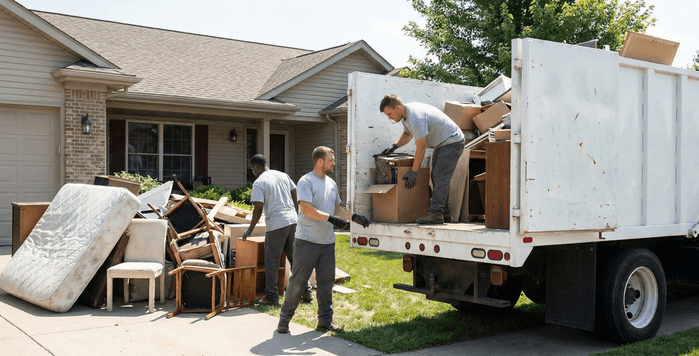
One old couch, a broken refrigerator, or a mattress that’s finally ready to go might not sound like much of a project until it’s time to actually move it. A single bulky item can still be heavy, awkward to carry, and difficult to fit into a regular vehicle, which is exactly why single-item junk removal exists as an option rather than an afterthought. What looks like a quick fix on paper often turns into an hour or more of lifting, maneuvering, and figuring out where the item is even supposed to go.
Professional removal takes that burden off a homeowner’s hands by handling the lifting, transportation, and disposal from start to finish, cutting down on the physical strain of doing it alone. This article walks through which items are suitable for pickup, what affects the cost, how access challenges come into play, what to prepare before the crew arrives, how scheduling works, safety considerations, and how to decide between professional removal and a DIY hauling trip.
Why One Unwanted Item Can Become a Big Job
It’s easy to assume that removing a single item should take no more than a few minutes, but the reality often looks different once the work actually begins. Size, weight, location inside the home, and how the item needs to travel to a vehicle all play a role in how much effort single-item junk removal actually requires. A queen mattress waiting in a second-floor bedroom, for example, isn’t just heavy; it’s bulky enough to make hallway turns and stairwells genuinely difficult without a second set of hands.
Consider a homeowner replacing an old refrigerator. The new unit gets delivered, but the old one still needs to leave the kitchen, travel through a doorway it barely fits through, and make it down a short flight of steps to a driveway. That single appliance can turn into an afternoon of maneuvering, especially without the right equipment. This is the kind of situation where One Item Junk Removal becomes genuinely useful rather than optional, and it’s also why a Single Junk Pickup is rarely as simple as it first appears once weight, access, and disposal requirements are factored in.
Which Household Items Are Best Suited for Pickup
Most single-item pickups involve furniture, large appliances, or bulky household fixtures that don’t fit neatly into a standard trash bin. Knowing what generally qualifies makes it easier to decide whether a removal service is the right call before reaching out for a quote. A Furniture Removal Service typically covers items like sofas, mattresses, dressers, and dining tables, while an Appliance Removal Service is built around refrigerators, washers, dryers, and similar large units. Anyone weighing whether a specific piece is worth professional help can look at the furniture removal benefits that come with clearing out one large piece for a broader sense of what typically gets included.
Common items suitable for individual pickup include:
- Sofas, sectionals, and recliners
- Mattresses and box springs
- Refrigerators, washers, and dryers
- Dressers, cabinets, and large bookshelves
- Hot tubs, exercise equipment, and other oversized fixtures
Large Item Removal and Bulky Item Removal both describe this same general category of objects too big, heavy, or awkward for regular curbside trash collection, but still reasonable for a single-item pickup appointment.
How Item Size and Weight Affect Removal Difficulty
Two items of similar size can require very different levels of effort depending on their weight, shape, and how they’re built. A large but lightweight object, like an empty entertainment center, is far easier to maneuver than something dense and compact, such as a washing machine or refrigerator packed with heavy internal components- the kind of fridge removal challenges that catch a lot of homeowners off guard. Shape matters too; an oddly balanced item without clear grip points can be more dangerous to carry than something bulkier but evenly weighted.
This is where Heavy Item Removal becomes a meaningful distinction rather than just another category. A queen mattress might be awkward but manageable for two people, while a stone-topped table or a cast-iron appliance may require additional support or equipment entirely. Heavy Junk Removal situations often call for straps, dollies, or extra hands, and Large Item Hauling in general depends as much on the object’s construction as it does on its overall dimensions.
When Professional Help Beats a DIY Hauling Trip
Deciding whether to handle a single item alone or bring in professional help usually comes down to a realistic look at the time, physical demands, and logistics involved, not just the size of the item itself.
Physical Effort and Personal Safety
Heavy or awkwardly shaped objects create real injury risks, particularly when the right equipment or an extra set of hands isn’t available. Lifting something beyond a safe weight, or carrying it at an odd angle through a hallway, is one of the more common ways DIY moves go wrong.
Vehicle and Transportation Requirements
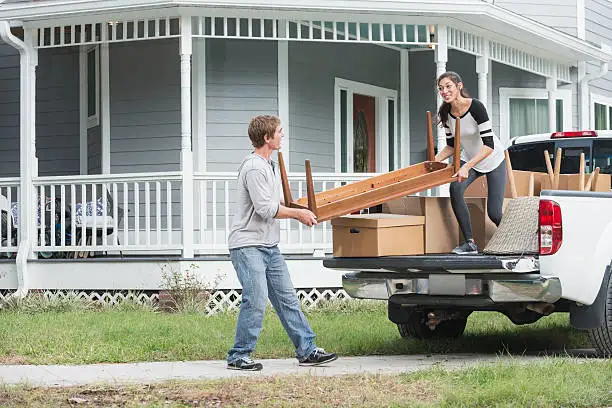
A standard sedan or small SUV often can’t accommodate a mattress, a sectional sofa, or a large appliance without risking damage to the vehicle or the item itself. Renting a truck or trailer adds another cost and another step to a project that was supposed to be simple.
Time Required Beyond the Actual Pickup
The actual lifting is often the shortest part of a DIY hauling trip. Finding a vehicle, arranging help, loading the item, driving to a disposal or donation facility, unloading it there, and making the return trip can easily turn into a half-day commitment.
Disposal Arrangements and Facility Rules
Not every facility accepts every type of item, and some require advance notice, specific drop-off hours, or separate fees depending on the material. Figuring this out ahead of time is an extra layer of research that professional removal simply skips.
Equipment and Additional Helpers
Dollies, moving straps, ramps, and a properly sized vehicle can all become necessary depending on the object. When none of that is readily available, even a manageable-looking item can turn into a stalled project.
Property and Access Challenges
Stairs, narrow hallways, basements, and elevators all add complexity to a single-item move. A path that looks straightforward at first glance can turn into a series of tight turns and awkward angles once the item is actually in motion.
How the Single-Item Pickup Process Usually Works
A professional pickup tends to move smoothly when there’s clear communication before the appointment. Here’s how the process generally unfolds from the first call to the final walkthrough.
Step 1: Confirm the item can be removed. Identify the item and check that the provider accepts that category of furniture, appliance, or bulky material before scheduling anything.
Step 2: Share item and access details. Approximate size, weight, current location, stairs, elevators, and narrow entrances should all be communicated ahead of time so the crew can plan accordingly.
Step 3: Decide on the pickup arrangement. Depending on what’s available, this may mean professional interior pickup or Curbside Item Removal, where the item is staged outside for a quicker appointment.
Step 4: Arrange the appointment.
Scheduling includes choosing an arrival window, confirming access instructions, and setting expectations for communication on the day of pickup.
Step 5: Let the crew handle lifting and loading.
Once on-site, professionals manage the physical removal, so there’s no need for the homeowner to carry the item themselves.
Step 6: Confirm the removal cost.
The final estimate may adjust slightly based on size, weight, labor, accessibility, and any disposal requirements specific to the item.
Step 7: Complete hauling and responsible disposal
After the item is loaded, it’s transported away and routed toward reuse, donation, recycling, or standard disposal depending on its condition.
This kind of Single Item Pickup takes the guesswork out of the process, and an Individual Item Pickup handled this way tends to move faster than most people expect once the details are settled in advance. Even a Single Item Removal involving Large Junk Removal-level effort follows roughly the same structure from booking to completion.
What Can Make a One-Item Pickup Cost More
There isn’t one flat price for removing a single item, since the actual cost depends on a handful of variables that can shift the estimate up or down. A lightweight chair and a waterlogged sectional sofa may look similar in size but require very different amounts of labor and disposal handling.
Factors that commonly affect pricing include:
- The item’s overall volume and physical dimensions
- Its weight and how many people are needed to move it safely
- Accessibility, including stairs, long hallways, or tight doorways
- Labor required for interior pickup versus curbside collection
- Special disposal or recycling requirements tied to the material
- How quickly the pickup needs to happen
Asking about these details upfront makes it easier to compare quotes accurately. A Single Item Pickup that involves Large Junk Removal-level weight or a genuinely Heavy Junk Removal situation will typically cost more than a lightweight item that’s easy to access and carry, and reviewing a furniture removal cost breakdown can offer a useful reference point.
When Same-Day Removal Makes the Most Sense
Some situations don’t leave room to wait for a standard appointment window. A moving deadline, a same-day appliance delivery that requires the old unit gone first, or a property turnover with a tight timeline can all make fast pickup genuinely valuable rather than just convenient. Same-day item removal depends on a provider’s current capacity and service area, so availability isn’t guaranteed for every request, but it can solve a real problem when timing is tight.
Situations where same-day pickup tends to help most include:
- A new appliance being delivered the same day the old one needs to leave
- A move-out deadline that doesn’t allow time for standard scheduling
- Unexpected bulky waste that’s taking up needed space
A One Item Pickup handled same-day still follows the same basic process as a scheduled appointment; it simply compresses the timeline, which is why a quick Single Junk Pickup request is worth a phone call rather than an assumption that it can’t be done.
What to Do Before Your Removal Appointment
- Clear pathways leading from the item to the nearest exit or driveway
- Remove any personal belongings stored inside or on top of the item.
- Secure pets in a separate room before the crew arrives.
- Unlock gates, doors, or storage areas the crew will need to access
- Communicate any unusual circumstances, like a narrow stairwell or shared hallway.
- Confirm whether the pickup is happening inside the home or at the curb.
Taking a few minutes to prepare makes an Individual Item Pickup go faster and reduces the chance of delays once the crew is on-site. Even a straightforward Single Item Removal benefits from this kind of preparation, and it matters even more for genuine Large Item Hauling jobs where access and timing are tighter.
How Professionals Manage Difficult Interior Access
Interior removal gets more complicated once a bulky item has to travel through a restricted or awkward space, which is why experienced crews approach access challenges with a plan rather than trial and error.

Planning the Removal Path Before Moving
Before any lifting begins, crews typically assess the full route from the item’s current position to the vehicle, identifying tight turns or obstacles in advance rather than discovering them mid-move.
Working Through Narrow Doorways and Hallways
Tight spaces often require careful positioning and controlled, deliberate movement to avoid unnecessary contact with walls, trim, or door frames along the way.
Managing Stairs and Multi-Level Homes
Upstairs bedrooms, finished basements, and multi-level staircases add extra coordination, since weight distribution and footing both become more important on uneven or angled surfaces.
Working Around Elevators and Shared Spaces
In apartment or condo settings, elevators, shared hallways, and building access rules all factor into how and when an item can be moved without disrupting other residents.
Protecting Floors, Walls, and Door Frames
Careful handling and a pre-planned route both reduce the chance of scuffed walls, dented door frames, or scratched flooring during the move.
Handling Long Carrying Distances
An item that’s manageable in weight can still be demanding if it has to travel a long distance from its original spot to an accessible loading point, since sustained effort adds up over distance even when the object itself isn’t especially heavy.
Why Inside Pickup Can Be Easier Than Curbside Hauling
Homeowners often assume they need to drag a heavy item outside before a removal crew will take it, but that’s usually not the case. Professional services are generally equipped to retrieve items directly from inside a home, which avoids unnecessary lifting, dragging across floors, and the risk of damaging the item or the property in the process.
- Inside pickup works well for heavy, awkward, or fragile items that are difficult to move without training or equipment.
- Curbside placement can suit smaller or lighter items that are already easy to carry outside without much effort.
Choosing between the two often comes down to what the item is and how much physical effort a homeowner is willing or able to put in before the crew arrives.
Where Furniture and Appliances May Go After Pickup
Once an item leaves the property, what happens next depends on its condition and material. Furniture in good shape may be donated or reused, while metal components from appliances can often be separated out for recycling instead of ending up in a landfill. Materials that can’t be reused or recycled are routed toward standard disposal. For a closer look at what happens to junk after removal, it helps to understand that responsible handling doesn’t stop once the truck pulls away from the curb.
Typical pathways after pickup include:
- Donation for furniture and household goods still in usable condition
- Recycling for metal, certain plastics, and other recoverable materials
- Standard disposal for items that can’t be reused or recycled
Furniture Hauling and Appliance Hauling both follow this same general pattern, and Residential Item Removal services that are transparent about their disposal process tend to give homeowners more confidence than one that treats it as an afterthought. Even a single sofa handled through Bulky Junk Pickup goes through this same basic sorting before its final destination is decided.
How to Choose a Reliable Single-Item Removal Service
Verify That Your Specific Item Is Accepted
Confirming acceptance before scheduling matters most for appliances, unusual objects, or oversized materials that not every provider is equipped to handle.
Ask How the Removal Estimate Is Determined
Understanding whether pricing is based on size, volume, weight, labor, access, or disposal requirements makes it easier to compare quotes without guessing at the final number.
Confirm Interior Pickup Is Available
This matters most when the item is upstairs, in a garage, or tucked into a space that’s genuinely difficult to reach without help.
Discuss Oversized or Heavy Items Early
Disclosing unusually large or heavy objects ahead of time lets the provider plan appropriately, rather than discovering a challenging item once the crew is already on-site.
Check Appointment and Communication Practices
Clear scheduling windows, arrival notifications, and communication about delays or changes all reflect how reliable a provider is likely to be on pickup day.
Understand the Provider’s Disposal Approach
Knowing whether reusable or recyclable materials are separated when appropriate gives a clearer sense of how responsibly a company operates beyond just the pickup itself. It’s also worth learning how to make furniture removal easier in general, since a provider that follows good practices tends to make every step of the process smoother.
Mistakes That Can Complicate a One-Item Pickup
- Describing the item inaccurately, leading to a mismatched crew or equipment
- Leaving pathways blocked with boxes, rugs, or other obstacles
- Not mentioning stairs, elevators, or narrow entrances in advance.
- Forgetting to empty drawers, cabinets, or compartments before pickup
- Giving unclear or incomplete access instructions for the appointment
Small oversights like these are usually behind the delays that turn an otherwise simple Single Junk Pickup into a longer appointment than expected. Being upfront about the item’s condition and the property’s layout before the crew arrives is one of the easiest ways to avoid a One Item Pickup running into unnecessary complications, especially for anything approaching genuine Heavy Junk Removal territory.
Final Thoughts on Making One-Item Removal Easier
The real difficulty behind removing a single item rarely comes down to how many objects are involved; it comes down to weight, size, access, transportation, and what needs to happen with the item once it’s out the door. A bulky couch, a heavy appliance, or an awkward piece of furniture can easily justify professional help when a DIY trip would mean renting a vehicle, recruiting extra hands, and spending an afternoon on a task that a trained crew from Junk People LLC can usually finish in a fraction of the time. Single item junk removal exists specifically for these situations, offering a faster and safer path than tackling a difficult object alone.
Whether the job involves Single Item Removal for a single mattress or a more demanding piece that needs extra equipment, taking a few minutes to describe the item accurately and prepare the space beforehand makes the entire process smoother. If there’s a bulky item sitting around waiting to be dealt with, reaching out to confirm a One Item Pickup and its specific requirements is often the simplest way to finally get it out of the house.
FAQs About Single Item Junk Removal
Single-item removal tends to raise a handful of recurring questions, from pricing and access to how quickly a pickup can actually happen. The answers below cover the concerns readers most often have before booking a service for one bulky item.
Yes, most providers offer single-item pickups specifically for situations where only one piece of furniture, appliance, or bulky object needs to go.
Cost typically depends on the item’s size, weight, accessibility, the labor required, and any special disposal needs tied to its material.
Most professional services are equipped to retrieve items from inside a home, not just from the curb, provided the space is accessible.
Yes, trained crews are generally prepared to handle stairs and multi-level access, though it’s worth disclosing this detail before the appointment.
Refrigerators, washers, dryers, and similar appliances are commonly accepted, though it’s best to confirm with the provider beforehand.